
What Do They Do in an Osteopathy Session? The Definitive Guide
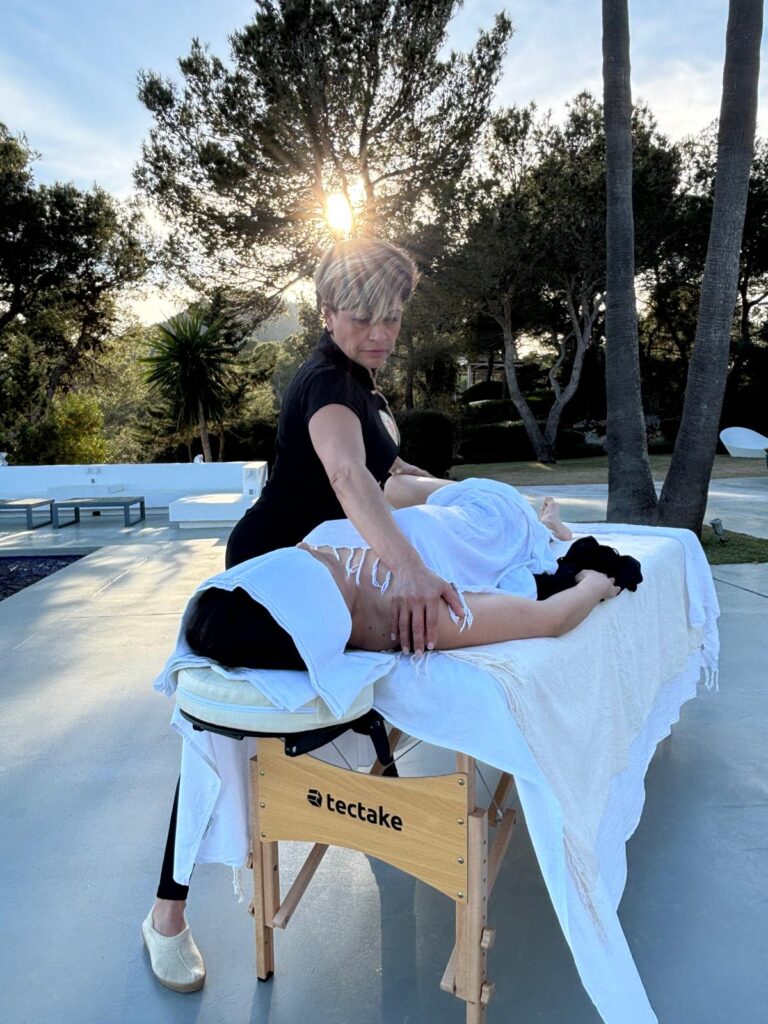
Tabla de contenidos
ToggleThe Definitive Guide
Do you Feel curious about osteopathy but do not know exactly what to expect on a first visit? It is normal. Put your well-being in the hands of a professional requires confidence, and that confidence is born of knowledge. If you’ve ever wondered, “what do you do in a session of osteopathy”, you’ve come to the right place.
We’re going to break down, step-by-step and non-technical complex, how is a consultation with an osteopath. Forget the uncertainty; at the end of this article, you will have a clear vision and complete a process designed to understand your body and help restore its natural balance.
Understanding the Philosophy: What Really Seek an Osteopath?
Before entering on the couch, it is essential that you understand the basis of osteopathy. Unlike other disciplines that can only focus on the symptom (the pain of back, that migraine), osteopathy sees you as a whole. An osteopath is not only about the pain, searching for the origin of the dysfunction that causes it.
The fundamental principle is that all systems of the body are interconnected. A problem in one part can manifest itself in a completely different one. The goal of a session of osteopathy integral in Ibiza is to identify and correct these “restrictions of mobility so that your body can use its incredible self-healing ability.
The Stages of your Session of Osteopathy: A step by Step Travel
A session of osteopathy is a methodical process, and custom. Although each patient is unique, the overall structure of a first visit usually follow a logical way to ensure an accurate diagnosis and an effective treatment.
Phase 1: The Anamnesis or Initial Interview
It all starts with a conversation. It is not a talk-trivial; it is the cornerstone of the whole process. The osteopath needs to know your history in order to understand your present. Get ready to talk in detail about the reason of your consultation, your medical history and your lifestyle. This phase is crucial; the more information you have the professional, the more accurate the diagnosis.
Phase 2: Physical Examination Manual
Once the osteopath has the map of your story, it’s time to explore the territory: your body. In this phase, you will be asked that you stay in their underwear comfortable to be able to see and feel with precision. Perform a static observation of your posture, tests of mobility, active and passive, to see how you move your body and look for blockages, and finally, a palpation expert to “feel” the texture and tension of your fabrics.
Phase 3: The Diagnosis and the Treatment Plan
With all the information collected, the osteopath joins the pieces of the puzzle. To establish a diagnosis osteopathic that is a hypothesis, functional on the origin of your problem. I will explain clearly and simply what you found and what will be the action plan customized for you.
Phase 4: The Treatment with Manual Techniques
yes, Now comes the treatment. The osteopath will use a variety of manual techniques, always adapted to your condition. Some of the tools that you can use are:
Manipulation of soft tissues: Through pressure, stretching and massage, working on muscles, tendons and fascia to reduce the tension. Many of these techniques are the basis of manual therapies that seek to the overall well-being, such as a relaxing massage in ibiza, which focus on releasing the accumulated stress in the body.
Techniques of joint: Movements, rhythmic and soothing to return to a joint to its full range of motion.
Manipulations of high-speed (Thrust): The famous “popping” or adjustment joint, a technique for rapid and precise for a lock to release.
Osteopathy, cranial and visceral: Touches very subtle in the skull or mobilization of soft bodies to rebalance the nervous system and improve its functioning. A good supplement might be the massage sacred head for a deeper relaxation.
At the end of the session, it is likely that you will give recommendations on stretches or exercises to maintain the results.
Frequently Asked questions about your Visit to the Osteopath
Is normal to have doubts before trying a new therapy. Here we answer the most common for you to go with total peace of mind.
How does it feel after a session of osteopathy?
The most common reaction is a feeling of relief and lightness,. it is Also normal to feel a bit tired or a little discomfort in the treated areas during the following 24-48 hours, while your body adapts. Drinking plenty of water is essential.
How do you go dressed in a session of osteopathy?
Comfort is the key. Opt for underwear comfortable or set sports (shorts and top). What is important is that the professional can access and evaluate easily the largest part of your body.
What is better, osteopath or physio?
Are complementary disciplines. Physical therapy is often focused on the rehabilitation of a specific injury. Osteopathy takes a more holistic approach, looking for the original cause of the dysfunction to rebalance the global structure of the body, as well as other manual therapies as a sports massage focuses on muscle recovery.
Why do some doctors do not recommend to osteopaths?
Historically there has been some skepticism, but this perception is changing. Osteopathy is a regulated health profession in many countries, and scientific evidence is growing every day. The key is to always go to an osteopath with a university degree and a college.
How to prepare for an appointment with the osteopath?
You do not need a special preparation, but it helps to think about your history of injuries and lead any evidence relevant medical need (x-rays, mri).
Conclusion: A Step Towards your overall well-being
Go to a session of osteopathy is to start a dialogue with your body, guided by a professional that knows listen to it. It is a journey to discover the source of your discomfort and restore your body’s ability to function optimally.
If you feel that you’ve tried everything without finding a solution, a holistic approach may be the answer. And if you are looking for to keep your body in the best state possible, remember that the care does not have to be single reagent. You can complement these treatments and maintain a state of optimal well being in many ways, and if you’re on the island, book your massage in ibiza to give your body the rest and the attention that it deserves.